blockchain-exam-paper-system-india-prevent-paper-leaks
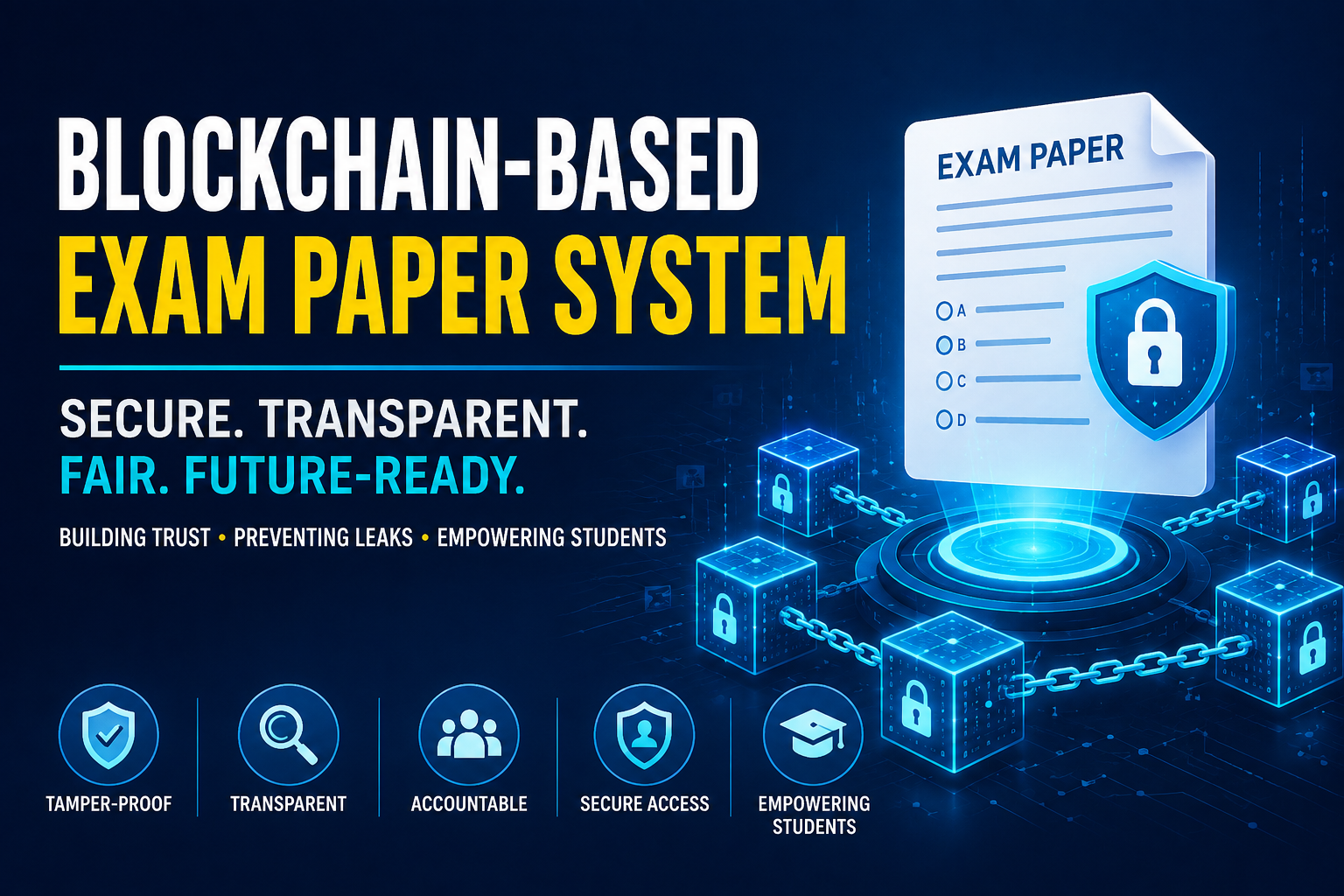
Can Blockchain Secure Exam Papers? A New Model for Transparent and Leak-Resistant Examinations in India
For millions of students, a competitive examination can determine access to education, employment and future opportunities. When a question paper is leaked or manipulated, the damage goes far beyond cancelling an examination. Students lose time, money and confidence in the system.
India has already strengthened its legal response through the Public Examinations (Prevention of Unfair Means) Act, 2024. In July 2026, the Government also highlighted further proposed measures through the Public Examinations Amendment Bill, including stronger punishments and faster investigation of examination fraud. (India Code)
Technology can provide another layer of protection. One possible solution is a blockchain-based secure examination paper management system.
What Is a Blockchain-Based Exam Paper System?
It does not mean uploading the actual question paper publicly onto a blockchain. Instead, the question paper remains encrypted and confidential, while blockchain records critical events in its lifecycle.
For example: Question Paper Created → Encrypted → Digitally Approved → Blockchain Hash Generated → Access Authorised → Paper Released at Scheduled Time → Every Action Logged
The blockchain can record:
• who created the paper
• when it was created
• who approved it
• whether the file was modified
• when access was granted
• which authorised examination centre accessed it
• when the final paper was released
• whether any unauthorised change occurred
The actual examination paper can remain in secure encrypted storage. Only its cryptographic fingerprint, access records and verification information need to be recorded on blockchain.
Why Blockchain? Traditional examination systems depend heavily on centralised databases, administrators, printing facilities, logistics providers and multiple officials.
Each additional point creates another potential vulnerability. Blockchain can create a tamper-evident audit trail shared among authorised stakeholders.
Once an authorised action is recorded, changing that history without detection becomes significantly more difficult. This aligns with the Government of India's National Strategy on Blockchain, which describes blockchain infrastructure as a mechanism for creating transparent, secure and trusted digital services, with capabilities including integrity, track-and-trace and tamper-evident records. (Meity)
How the System Could Work
-
Question Paper Creation The authorised examination authority prepares the paper inside a secure digital environment. Once finalised, the document is encrypted. A unique cryptographic hash is generated. Think of this as a digital fingerprint of the question paper. Even a tiny alteration to the document would produce a different fingerprint.
-
Blockchain Registration The hash, timestamp and authorised digital signatures are recorded on a permissioned blockchain controlled by authorised government and examination institutions. The question paper itself remains encrypted outside the blockchain.
-
Multi-Level Approval Paper setters, moderators and examination authorities can digitally approve the document. Every approval creates a timestamped record. This creates a clear chain of responsibility.
-
Controlled Release The encrypted paper remains inaccessible until the predetermined examination window. Decryption can require approval from multiple authorised officials instead of depending on a single person. This reduces dependence on one administrator holding complete control.
-
Examination Centre Access Each authorised centre receives controlled access shortly before the examination.
The system records: Centre ID + authorised officer + time of access + document hash + release status If a paper is accessed unusually early or by an unauthorised account, the activity can be flagged.
- Verification Before printing or distribution, the system can verify that the paper's blockchain fingerprint matches the originally approved version. If the file has been altered, verification fails.
What Does This Mean for Students? The biggest beneficiary should be the student. A student preparing for an examination should not have to wonder whether someone else received the question paper earlier.
A stronger digital chain of custody can provide: Greater Fairness Every candidate should receive access to the same authorised examination paper at the same scheduled time.
Greater Accountability If something goes wrong, investigators can examine an independently timestamped audit trail rather than relying entirely on manual records.
Faster Investigation The system could help establish which authorised identity accessed a document, when access occurred and whether the document was changed.
Reduced Examination Disruption Technology cannot guarantee that every leak will disappear, but reducing vulnerable handling points and increasing accountability may reduce opportunities for unauthorised access.
Fewer disruptions would mean fewer cancelled examinations, repeat journeys and additional preparation costs for students and families.
Transparency Without Revealing the Question Paper Transparency does not mean making examination papers visible before an examination. The content must remain confidential.
What should become transparent is the process: Who approved it? When was it encrypted? When was it released? Which centre accessed it? Was the original document modified? Was access provided before the scheduled time? Blockchain can make the chain of custody transparent while keeping the examination paper confidential. That distinction is important.
Benefits for Examination Authorities A properly designed system could provide: • tamper-evident examination records • end-to-end digital chain of custody • timestamped approvals • role-based access • digital signatures • automatic integrity verification • central monitoring • auditable examination-centre access • better evidence during investigations • reduced dependency on paper-based administrative records Benefits for Government and Investigators In the event of a suspected paper leak, investigators often need to reconstruct what happened.
A blockchain audit system could provide a chronological record showing: Who → Did What → To Which Paper → At What Time → From Which Authorised System It could therefore complement, rather than replace, existing cybersecurity logs, forensic evidence and police investigation. Blockchain Alone Is Not Enough Blockchain cannot stop someone from photographing a question paper after legitimate access or prevent every form of insider misconduct. A secure examination platform would still need: • strong identity verification • encryption • hardware security modules • multi-factor authentication • cybersecurity monitoring • secure examination-centre infrastructure • role-based permissions • device controls • digital signatures • employee background and access controls • real-time anomaly detection • independent audits The strongest model is therefore Blockchain + Encryption + Cybersecurity + Digital Identity + Human Accountability. A Possible Model for India India does not necessarily need a public cryptocurrency blockchain for examination management.
A government-controlled permissioned blockchain or trusted national blockchain infrastructure would be more appropriate because examination information is highly confidential. A pilot could begin with a limited number of examinations and examination centres.
The government could measure:
• unauthorised access attempts • paper-distribution time • integrity-verification failures • audit accuracy • incident investigation time • infrastructure cost • examination-centre reliability Only after independent security testing should such a system be expanded. From Punishment to Prevention India is strengthening laws against examination fraud. Technology can complement those laws by making the examination process itself more accountable.
The objective should not simply be to punish a paper leak after it happens.
The objective should be to build an examination infrastructure where unauthorised access becomes harder, manipulation becomes detectable and every critical action leaves a verifiable digital trail. For students and parents, that ultimately means something much more important than blockchain itself: Confidence that every candidate is getting a fair chance.