Blockchain + IoT: Can We Trust the Data Coming from Machines?
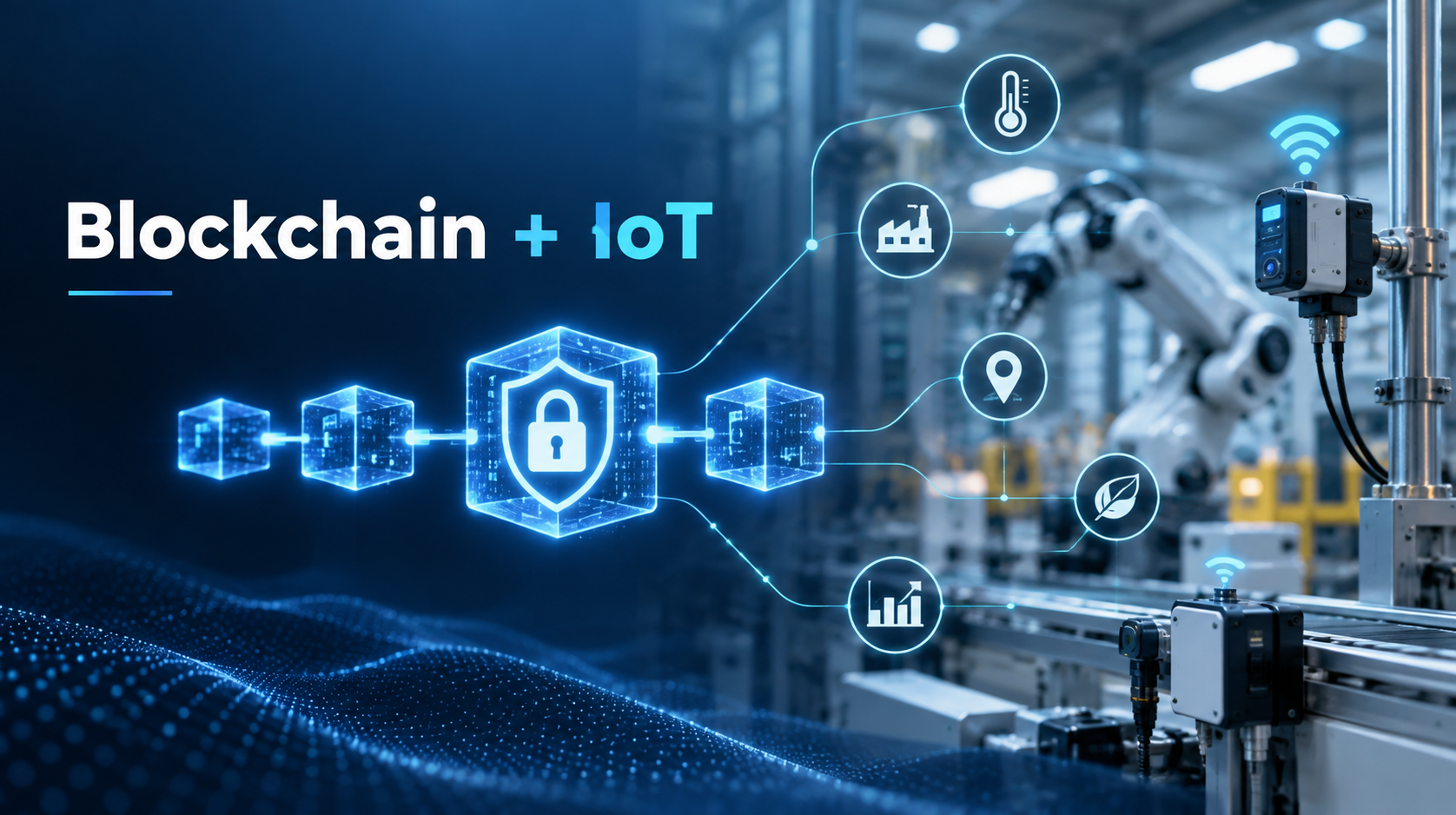
Millions of Devices Can Generate Data. The Bigger Question Is Whether That Data Can Be Trusted.
A modern industrial facility can have thousands of sensors.
They monitor temperature, pressure, vibration, location, energy consumption and machine performance.
The data is valuable.
But there is a fundamental question:
Who verifies that the data has not been changed?
This is one of the areas where blockchain and IoT are increasingly being studied together. Research identifies potential benefits around data security, integrity and traceability, while also highlighting resource constraints in IoT environments.
The IoT Trust Problem
Imagine a cold-storage facility transporting medicines.
Sensors continuously record temperature.
If the temperature remains within the required range, the shipment continues.
If the temperature rises beyond a defined threshold, an alert is generated.
But if the data is modified later, determining what actually happened becomes difficult.
Blockchain can provide a tamper-evident record for important sensor events.
Device → Data Generated → Verification → Record → Application
The actual sensor stream does not necessarily need to be stored on blockchain.
Instead, important events or cryptographic fingerprints can be recorded.
What Could Be Recorded?
For example:
- Device identity
- Timestamp
- Sensor event
- Location
- Verification status
- Maintenance event
- Alert status
- Data hash
This creates an auditable history without putting every individual sensor reading on the ledger.
The Device Itself Is Still a Risk
Blockchain cannot determine whether a sensor was physically damaged.
It cannot automatically detect whether someone replaced a sensor.
It cannot guarantee that a compromised device is producing genuine information.
This is the classic data-input problem.
False Data + Immutable Blockchain = Immutable False Data
That is why IoT blockchain systems need secure device identity, trusted hardware, authentication and reliable data collection.
Why Edge Computing Matters
IoT systems generate enormous amounts of data.
Sending everything to a blockchain would be inefficient.
Edge computing can process information close to the device.
Only important events can then be sent to the blockchain.
For example:
Sensor → Edge Analysis → Important Event Detected → Blockchain Record
This reduces unnecessary traffic and improves response time.
Where It Could Matter
Potential applications include:
- Smart manufacturing
- Cold-chain logistics
- Connected vehicles
- Energy systems
- Industrial monitoring
- Smart buildings
- Agriculture
- Healthcare devices
The goal is not to put IoT on blockchain.
The goal is to create a system where important machine-generated information can be verified later.
As machines increasingly make decisions and generate operational records, that ability could become an important part of trusted digital infrastructure.